

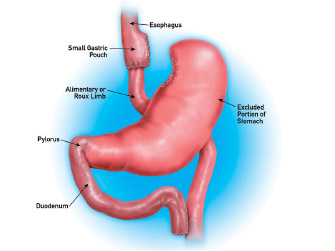
On this page, you’ll learn more about our NYC gastric bypass surgery, what it is, and how it works. You’ll also learn more about potential gastric bypass complications, and the benefits this type of procedure offers you for weight loss. The Roux-en-Y gastric bypass surgery, commonly called gastric bypass, is a popular weight loss surgery that has been referred to as the gold standard of bariatric surgery. The gastric bypass has been performed for many years and is the oldest weight loss operation.






Disadvantages Of Gastric Bypass Surgery
The gastric bypass surgery is more complex than either the gastric sleeve or Lap Band. Similarly, the recovery time is somewhat longer than it is with either the sleeve or Lap Band. This added level of complexity and the rerouting of the intestines means that the bypass has a slightly higher rate of serious complication rate than some of the other operations.
One reason our New Jersey and NYC gastric bypass patients lose so much weight is that the operation leads to fewer calories being absorbed by the body. However, this can also lead to a disadvantage of the operation. When fewer calories are absorbed, fewer nutrients are also absorbed. To help avoid further gastric bypass complications, patients need to take oral supplements of iron, vitamins, and calcium for life, and some patients also need Vitamin B12 injections. To summarize, disadvantages and complications of gastric bypass include:
- This procedure has a slightly higher rate of complications than the other operations (i.e. gastric banding, sleeve gastrectomy) because of multiple staple lines and new bowel connections.
- There is a need to take oral supplements of iron, vitamins, and calcium for life, and some patients also need Vitamin B12 injections. Recovery time is slightly longer than after banding and sleeve gastrectomy.